LANDSCAPE PHOTOGRAPHY GUIDE: LIGHT AND COMPOSITION

Learn essential landscape photography techniques in this comprehensive guide covering light, composition, and practical tips. Whether you’re a beginner or experienced photographer, this guide will help you understand how to combine different types of light with strong compositional choices to create compelling landscape images that speak first to you, and ultimately to the viewer.

Composition Basics for Landscape Photography

Image composition is the way a photographer arranges the natural elements of a scene within the four edges of a photograph. Its principal goal is to capture the viewer’s interest and guide them on a visual journey through your photo. Successful composition not only organizes the chaotic elements of a scene in an aesthetically pleasing way but also connects emotionally, showing the viewer what it felt like to be there. Great composition can tell a story greater than the sum of the parts, expressing a part of the human experience in an abstract form.

When creating a landscape photograph, start by asking: “What do I like most about this scene?” Each photographer’s answer will be unique, shaped by personal interests, experiences, and perspectives. This answer defines your subject and directs your photo’s focus. If art is about expressing feelings, thoughts, and observations, then identifying your subject is essential for turning a scene into a personal expression.

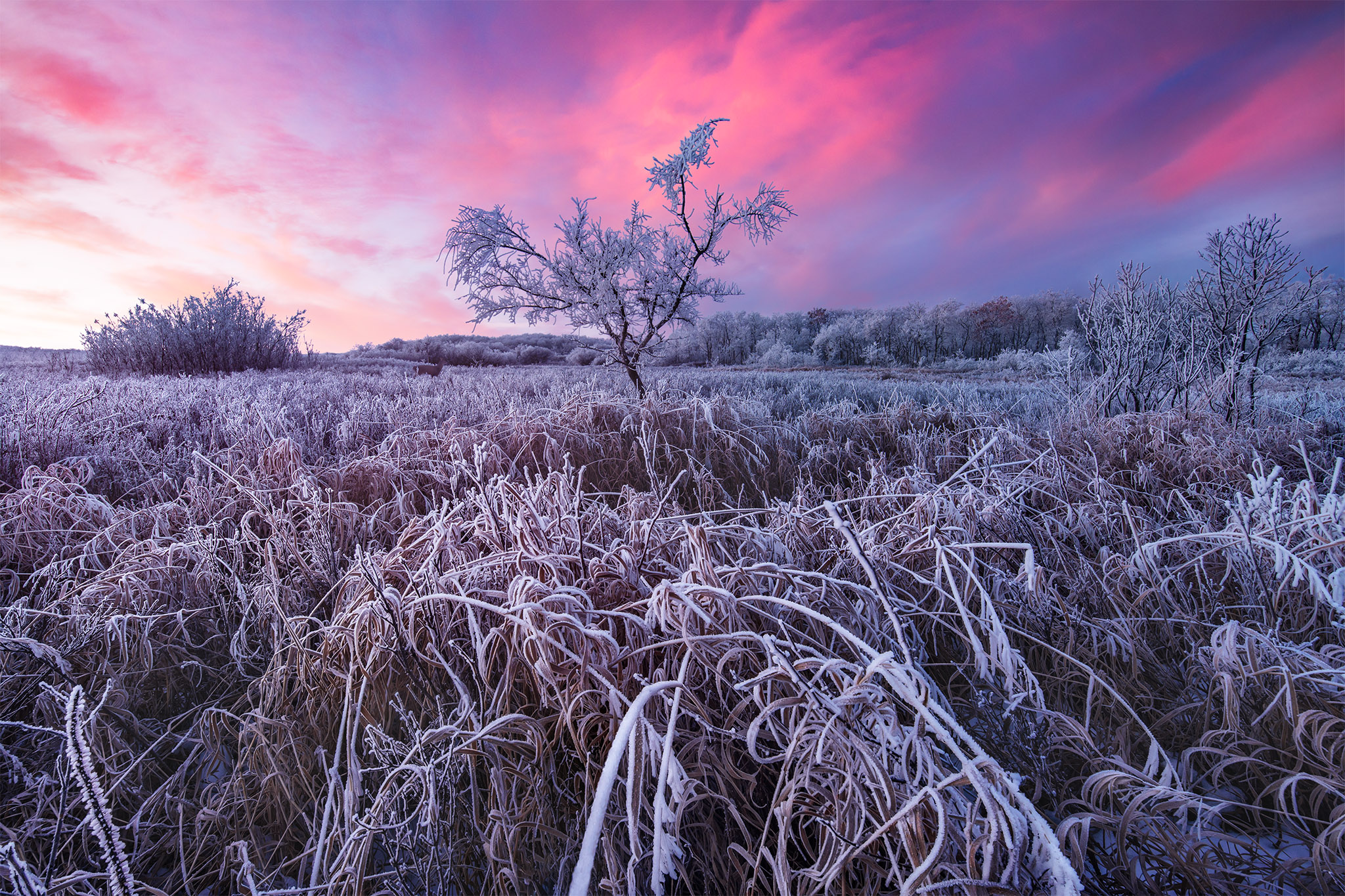
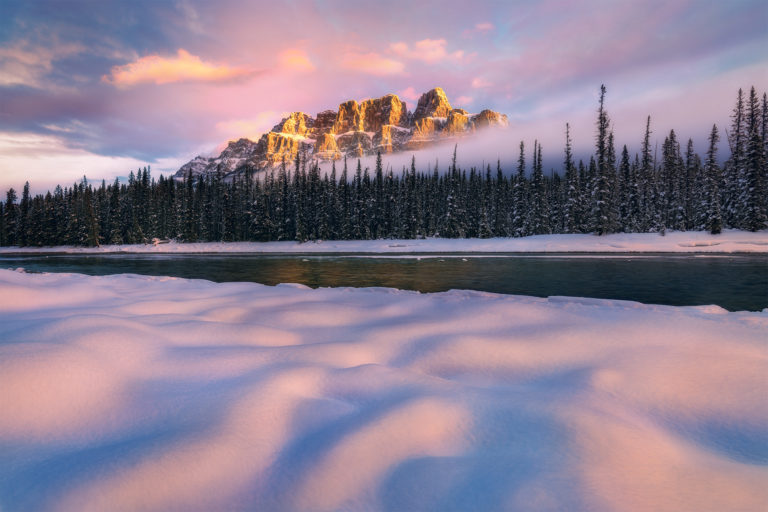
A landscape photograph of a beautiful sunrise at Castle Mountain in the winter

What Makes a Composition Work

Successful image composition is both art and intuition. While there are rules and techniques that guide the eye, ultimately, composition works when it communicates your experience of the scene. From my years photographing landscapes in Western Canada, I’ve found that the best photos happen when you understand both the technical principles and how the scene feels in the moment.

Here are some key elements that consistently make compositions work:

  1. Balance
    A balanced photo doesn’t necessarily mean symmetry. It’s about distributing visual weight so the scene feels stable and intentional. A strong foreground element can balance a colourful sky, or a forboding mountain can counter a soft meadow of wildflowers. When balance works, the viewer’s eye flows naturally through the image.
  2. Leading Lines
    Lines in a scene — whether rivers, paths, fences, or ridgelines — guide the viewer’s eye to your subject. In the field, I always look for natural lines that invite exploration. Leading lines aren’t just directional; they create a sense of depth and narrative, pulling the viewer into the scene rather than letting them glance past it.
  3. Foreground, Middleground, Background
    Great landscape compositions often use multiple layers. Including a compelling foreground element gives context and depth, while the middleground and background provide scale and environment. From my experience, the viewer connects more deeply when the image has a visual path through these layers.
  4. Framing
    Natural frames like tree branches, rock arches, or mountain gaps, can draw attention to your subject and create intimacy. In the field, I deliberately search for ways to frame a scene, because it focuses the eye and emphasizes the story I want to tell.
  5. Rule of Thirds (and When to Break It)
    The classic rule of thirds is a helpful starting point: place key elements along imaginary lines that divide the frame into thirds. But in the field, I often break this rule intentionally, letting the horizon float higher or lower, or centering an isolated subject, when it better conveys what I felt in that moment.
  6. Color, Light, and Contrast
    Composition isn’t just shapes – it’s also how light and color interact. I pay attention to contrasts, complementary colors, and the mood that different lighting conditions create. A well-composed photo will guide the eye while evoking an emotional response.
  7. Story and Emotion
    Above all, composition works when it tells a story. Every element in your frame should support the narrative you want to share. In my photography, I ask: “What do I want the viewer to feel? What drew me to this scene?” Answering these questions helps every technical choice — balance, lines, framing — feel purposeful.

For those who want to dive deeper, I offer a FREE eCourse on image composition in landscape photography. Scroll to the bottom of the page to sign up and start developing your own visual storytelling skills.

Landscape Photography Composition Course on iPad screen

Free Landscape Photography Course! Improve your photography. 

Download this FREE, 5-day landscape photography course on image composition in landscape photography. Learn, via email, about image composition, the importance of a subject, how to arrange successful images, and my 5 favourite approaches in the field.


RECOGNIZING LIGHT IN LANDSCAPE PHOTOGRAPHY

So, what role does light play in landscape photography? Almost no landscape photographer would argue that it isn’t the pursuit of great light that draws us into nature. For many, this means heading out during the golden hours — the periods at the beginning and end of the day. When I started, I was told, as I’m sure many of you have been, that the best photos happen during these times. That advice sent me out early in the morning and kept me late into the evening, chasing dramatic color and dynamic light, capturing mountains, lakes, and forests under vibrant skies. The underlying belief seemed simple: more colorful conditions equal better photographs.

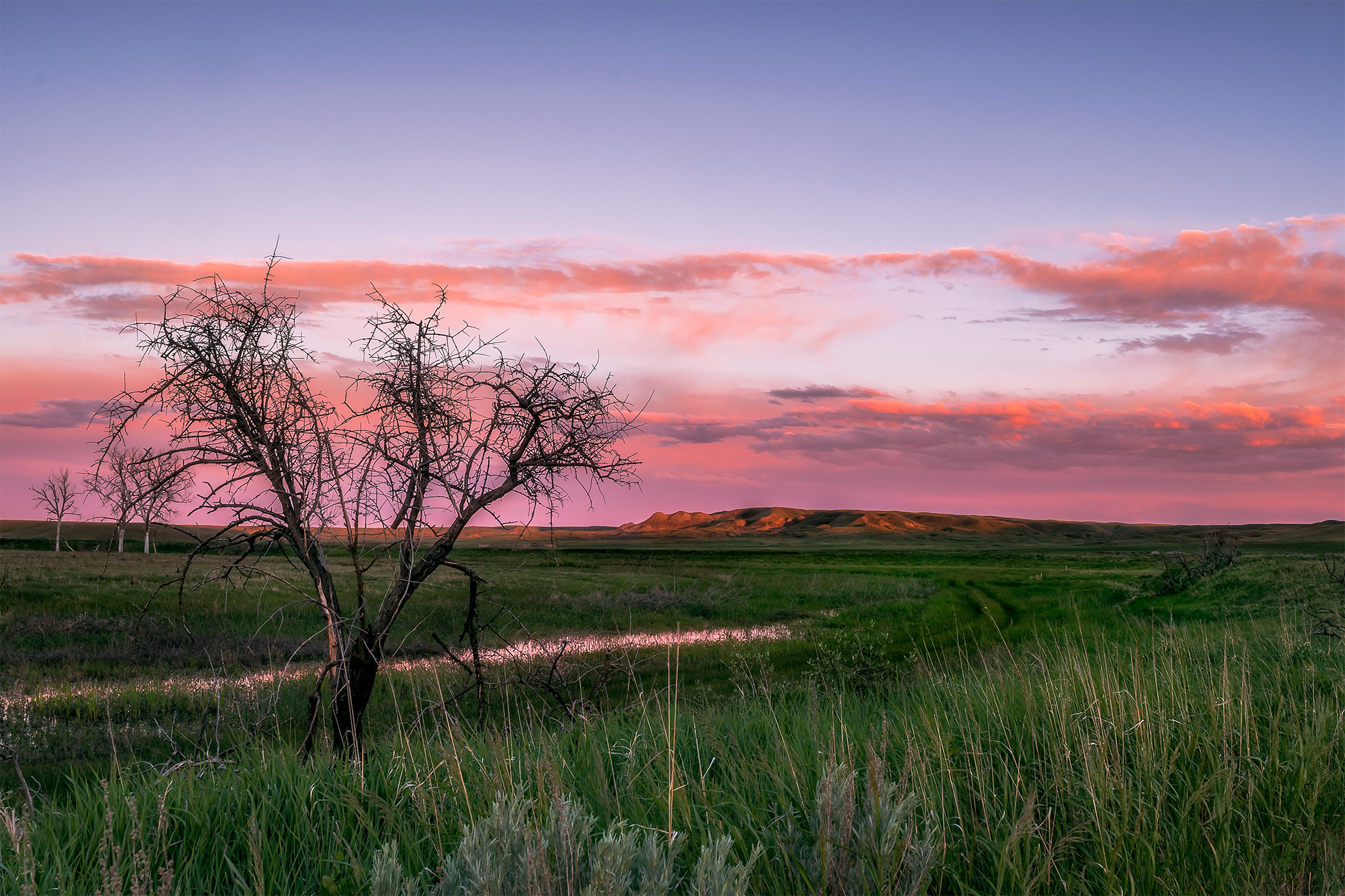
Sunset in with a dead tree in front

Beyond Golden Hour

After a year of this routine, my younger brother asked why I kept taking the same formulaic photograph over and over. He pointed out that great landscape photographers find photographic potential in all hours of the day and challenged me to explore beyond the golden hours. At the time, I didn’t see his point and honestly wondered why he would insult my ‘groundbreaking’ work.

Looking back, I realize he wasn’t dismissing my photographs or trying to ruin my colour high. He was pointing to something more important: landscape photography is about seeing creatively, not just chasing dramatic skies. By limiting myself to golden hours, I was missing opportunities to capture subjects that could connect with viewers on a deeper emotional level — beyond surface aesthetic appeal. Landscape photography is, at its core, a form of personal expression. Understanding the different types of light opens the door to creative freedom and allows your imagery to reflect your vision and your experience of a scene.

I still love burning red skies as much as anyone, and I will continue to chase them. But the purpose of this discussion is not to guilt you into ignoring golden hours. It’s to explore what other types of light exist, which subjects work best in that light, and how a thoughtful understanding of your subject can connect with viewers emotionally. By becoming a student of light, you gain the freedom to express yourself more fully through your landscape photography.

Understanding the Three Types of Light in Landscape Photography: Flat, Direct, and Reflective

Light shapes every landscape photograph, influencing mood, depth, and composition. In this section, we’ll explore the three main types of natural light: flat light, direct light, and reflective light. Understanding how each behaves in the field allows you to choose the right light for your subject, anticipate shadows and highlights, and create images that connect emotionally with viewers. Whether you’re chasing dramatic skies or subtle textures, recognizing these types of light is a fundamental skill in landscape photography.

FLAT LIGHT

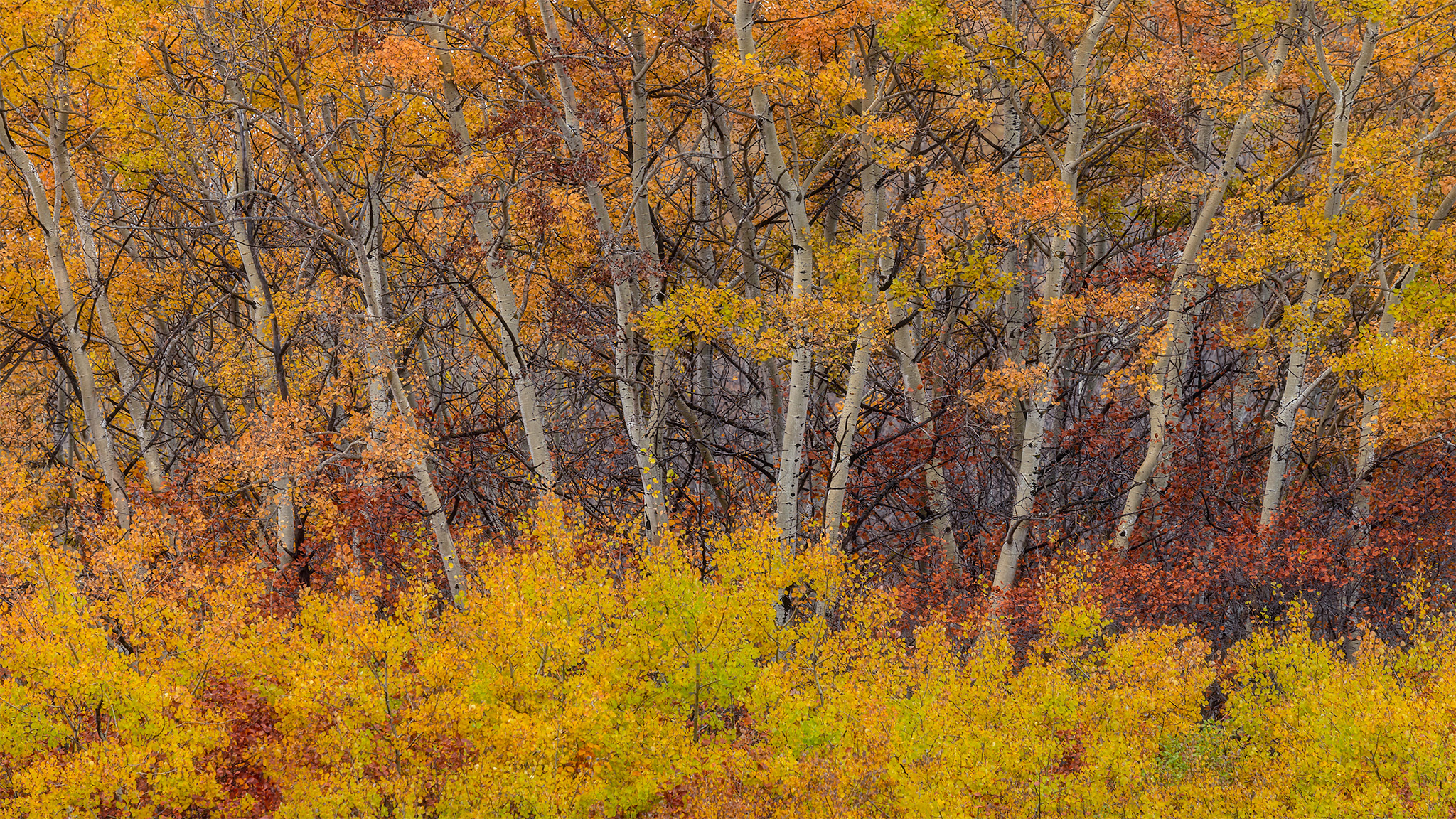
Lately, I’ve found that my favourite type of light in landscape photography is flat light. There are a couple of versions of this light, and it’s important to understand the distinction. The first type of flat light is when there is no direction or dimension to the light. Typically, this occurs when there is a high percentage of low altitude clouds and the sun is blocked, unable to illuminate the scene. The result is that there is virtually no contrast in the landscape.

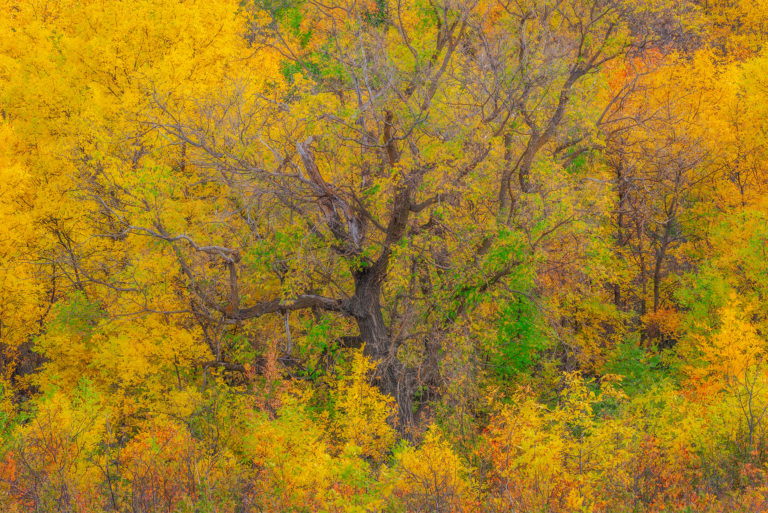
An intimate landscape photograph of an old poplar tree surrounded by vivid fall colours in Wascana Trails, Sasktchewan

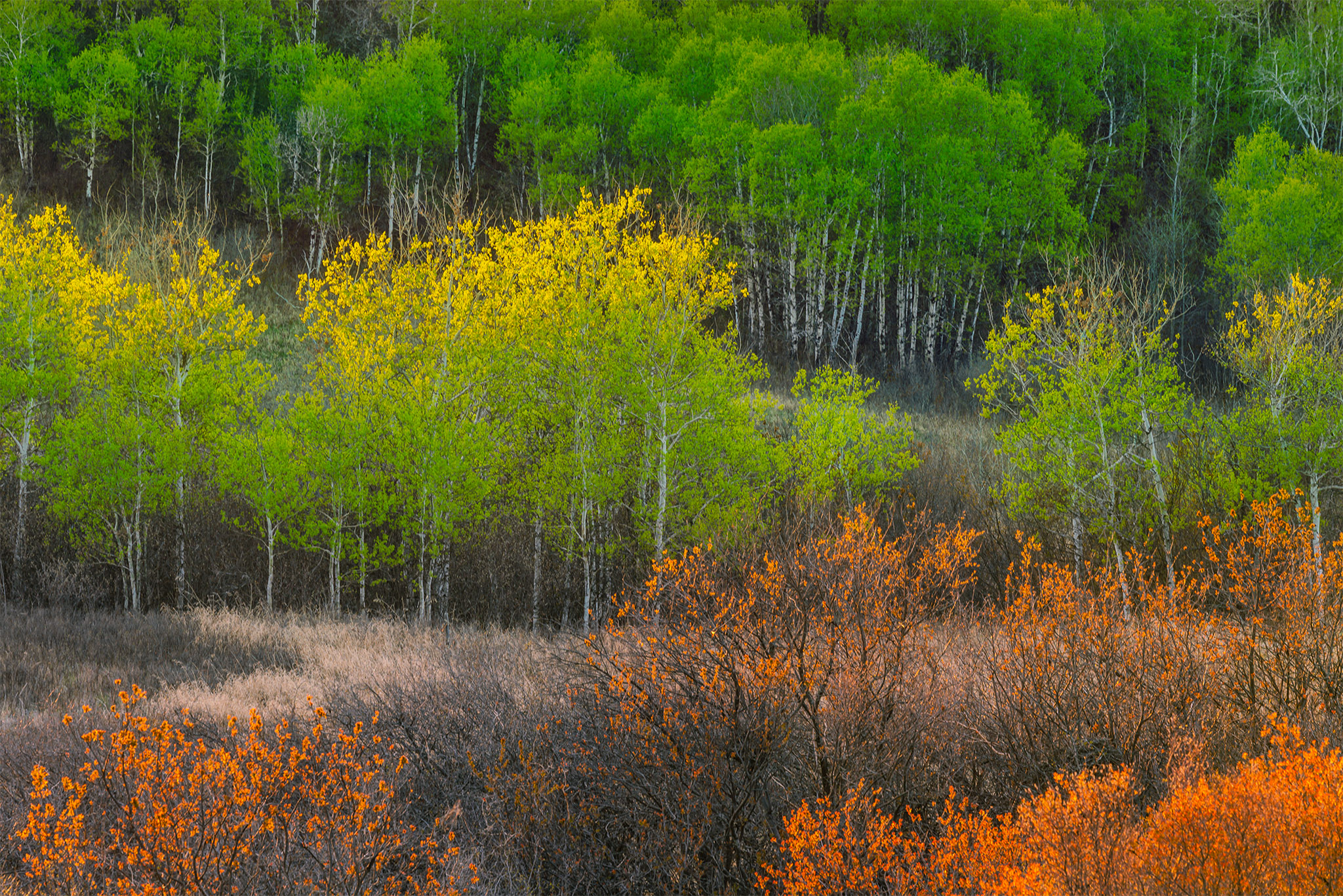
The second kind of flat light is a directional light. This occurs when the sun is above the horizon but is covered in medium or high altitude clouds. The benefit of these lighter clouds is that they create a softbox type of effect one would achieve in a studio. There are no harsh highlights, but there is enough contrast to create depth and dimension in the landscape.

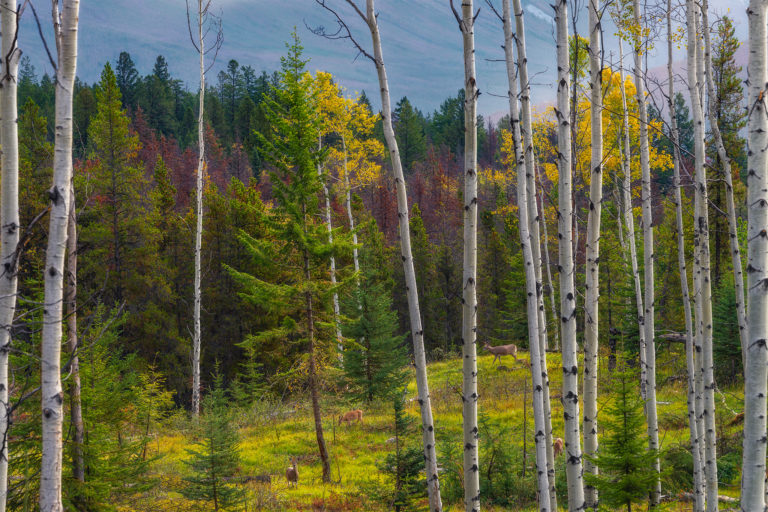
A nature photograph taken in Jasper National Park of aspen trees in autumn colour with light hitting a lone conifer in the background. 4 deer wander through the landscape

There are two reasons that flat light has become my favourite type of light in landscape photography. The first is that I don’t have to wake up early in the morning to greet a 4:00 AM sunrise. At times it feels crazy to be waking up when people are just getting back from a Friday night out, just for the chance of amazing colour in my photograph.

The second reason I love flat light is that it can lead to a more contemplative approach that can foster more creative landscape photography. Simply, subjects in the middle of the day under flat light, are things that you would never dream of photographing under a burning sky. And because the sky isn’t doing anything exciting, you can forget the sky and focus instead on photographing smaller, more intimate details in the landscape with a telephoto lens. 

In flat light I often find myself wandering through a forest, along the creek’s edge, inspecting the ground, or at the base of a waterfall. Once you’ve found the answer to the question, “What speaks to you about this scene?”, you can take your time composing and think more creatively because flat light doesn’t move quickly. This contrasts with the reactionary approach taken with a burning sky when there are mere minutes to capture a photo at peak colour.

DIRECT LIGHT

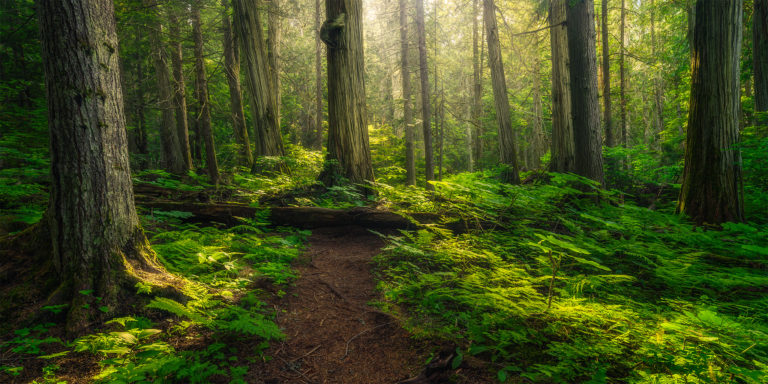
In theory, this light is fairly straightforward. Simply, it is when the sun is shining directly on your scene. This either means sidelight (when the sun is shining in from the side of your photo) or backlight (when you are photographing facing towards the sun). Unlike flat light, which normally occurs outside of golden hour, direct light can happen at any point after sunrise and before sunset, including the golden hour. I find that when I’m planning for landscape photography during sunrise or sunset, I’m looking for subjects that receive direct light, and aren’t just backlit with a colourful sky above.

A nature photograph of an old growth forest in British Columbia

Golden hour, by definition, is the hour after sunrise and the hour before sunset. Direct light during these hours will be softer, with more pleasing contrast, than direct light in the middle of the day. It’s generally a warmer tone that viewers find more pleasing in a finished photograph, as opposed to the cooler tones that occur nearer the middle of the day. This golden hour light is easier to manage in post-processing because there isn’t that harsh contrast that occurs when the sun is high in the sky.

Direct light can be on your subject, or it can be your subject. If the light is doing something particularly amazing on just one layer of the landscape, you can draw your viewer in. The highlights (or brighter parts of your scene) always capture the attention of your viewer first. So, ensure that the light is aiding or illuminating your subject or, if the light is your subject, that there aren’t other landscape elements competing with it for your viewer’s attention.

REFLECTED LIGHT

You’ve probably noticed by now that there are a lot of potential compositional directions one could go with flat light and direct light. Reflected light is much more straightforward. It happens when light bounces around and is absorbed by different elements in your scene. Think of how a studio photographer would use a reflector in a studio. That photographer uses a reflector to bounce light onto a subject to soften shadows or illuminate them. The same happens in landscape photography when light bounces off elements in the landscape. The principal difference between a studio’s reflector and reflected light in nature is the latter often creates beautiful contrasts in colour. 

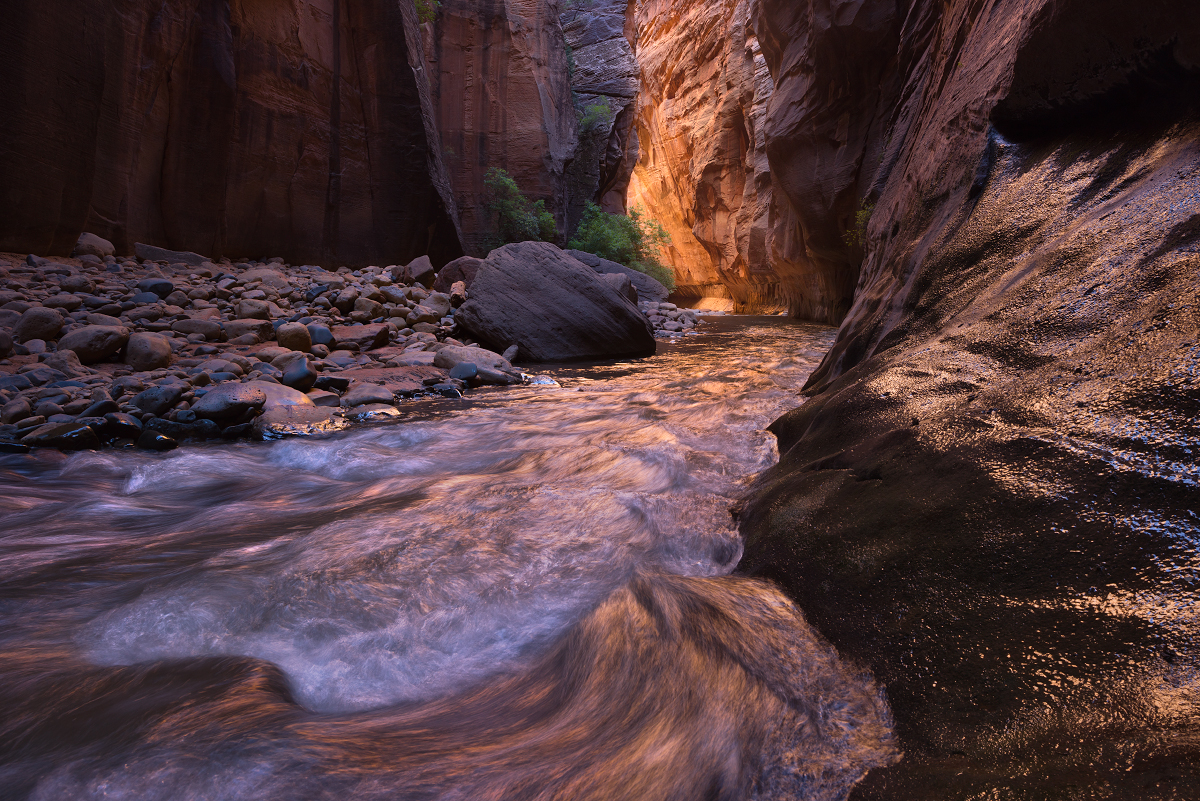
When light reflects off a red canyon wall, for example, it provides both light and the warmer colour tones of the canyon wall to other elements in the photo. We can see a beautiful contrast in colour when photo elements that are in shadow, reflect the ambient light from the blue sky above. You can see this mix of cooler and warmer tones in this photo by photographer, Bryce Mironuk

An example of reflected light bouncing off a canyon wall in the landscape

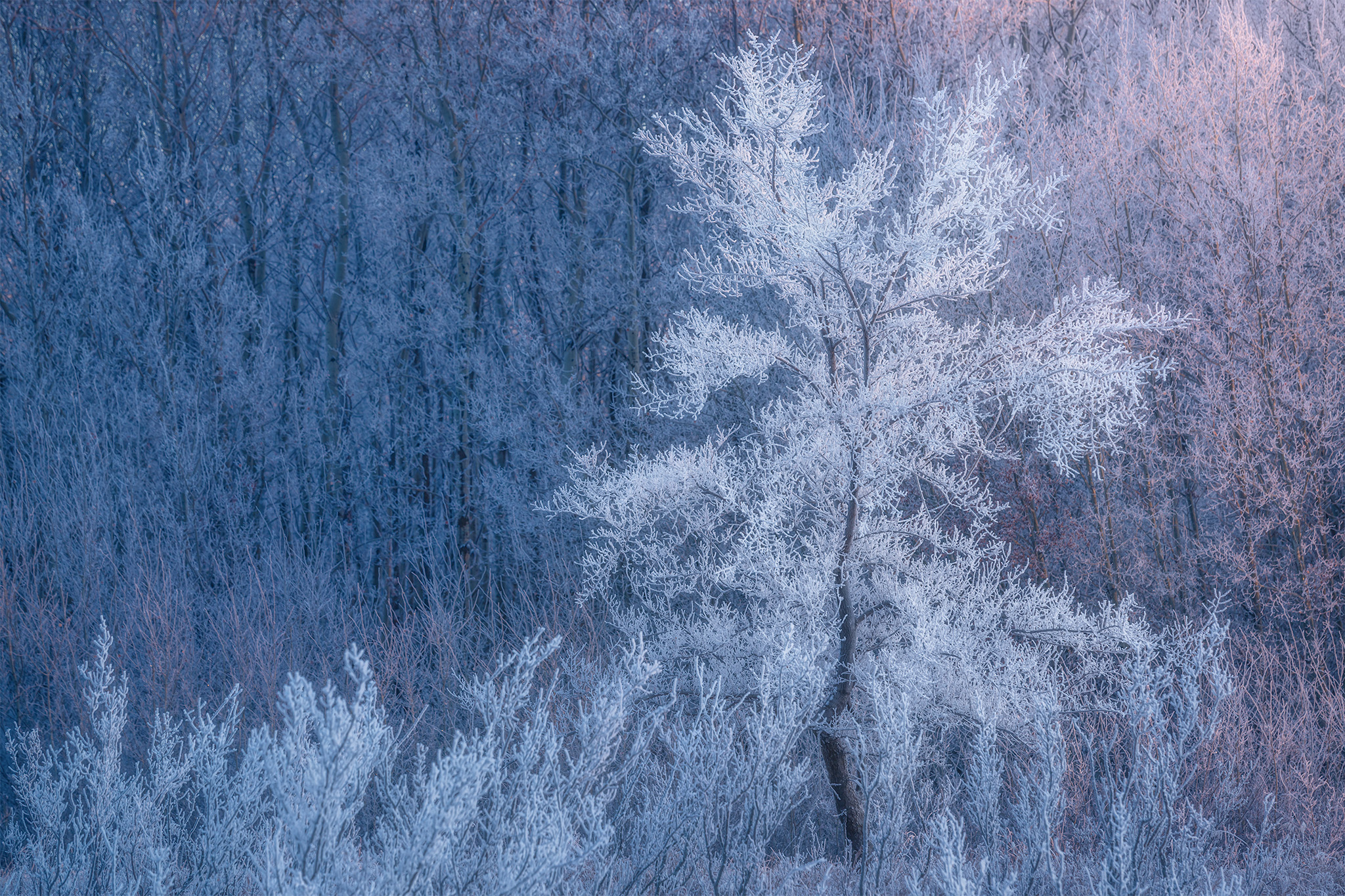
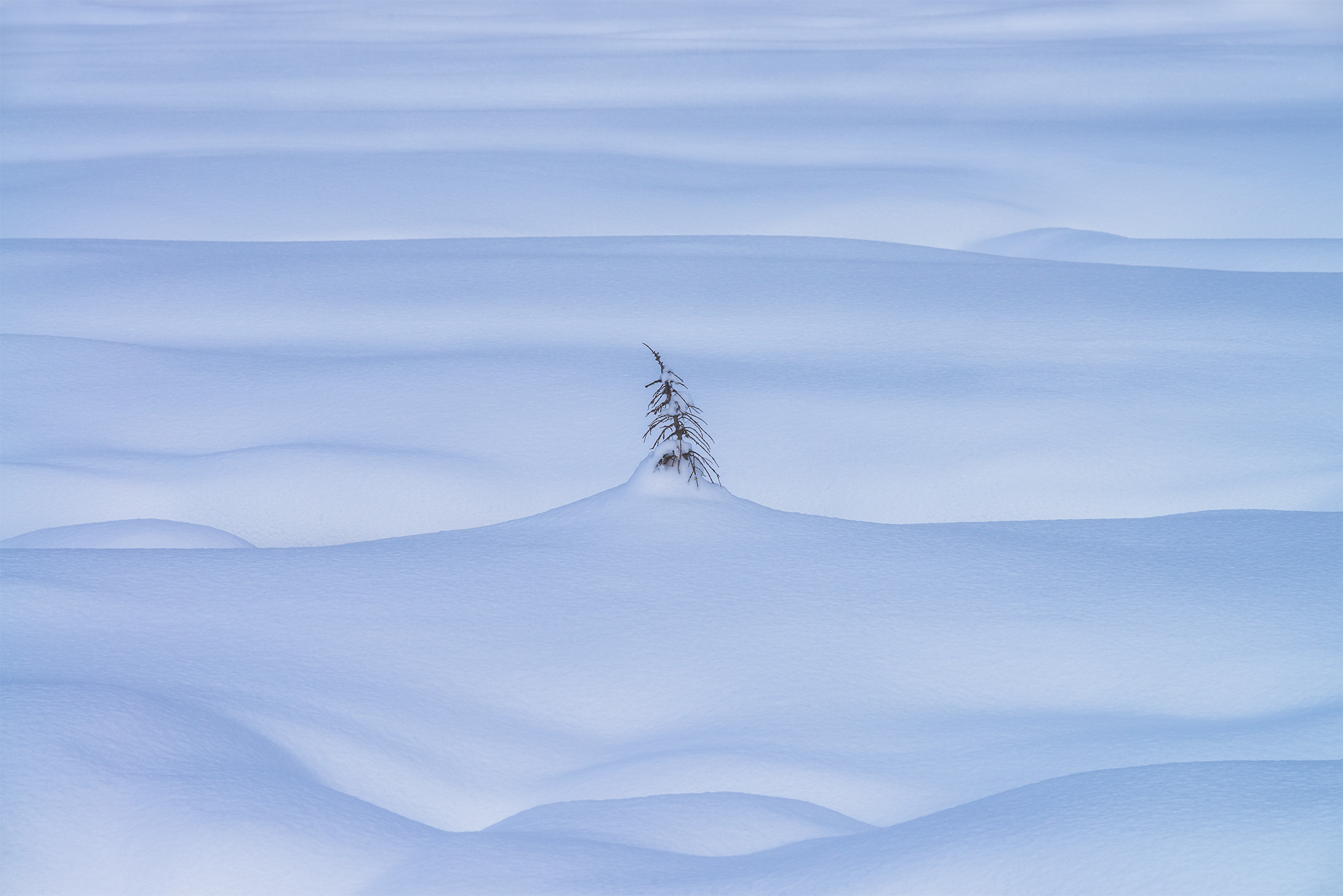
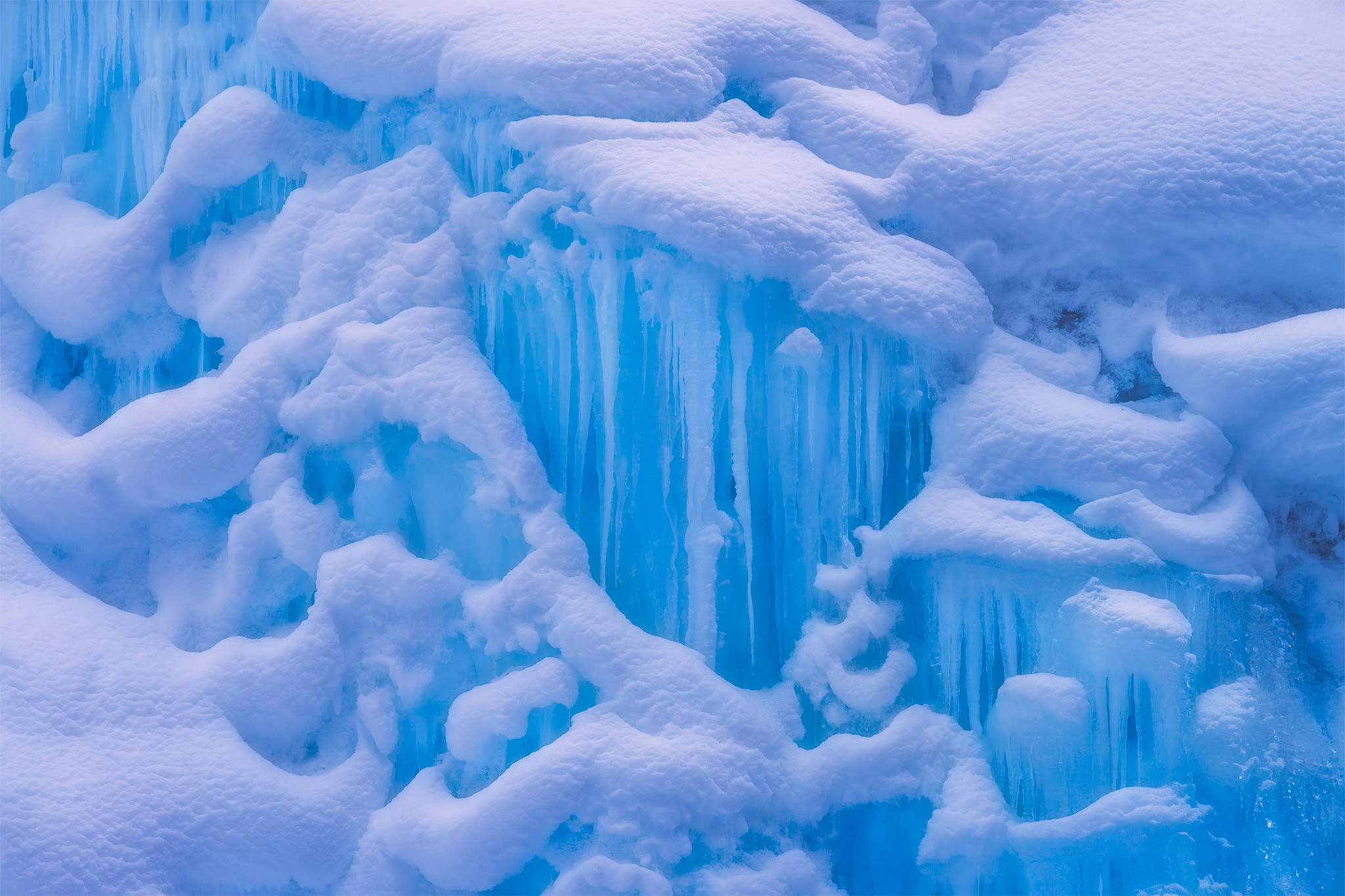
Snow also has wonderful reflective qualities. Being white, it’s going to reflect any light that hits it, much like a studio photographer’s reflector. So during those golden hours, the quality of light on snow and ice is incredible. You see that same beautiful contrast of colour. The colourful morning light that skims the snow or ice, will contrast with frozen elements in the shade that reflect ambient light from the blue sky above. One of the more interesting parts of landscape photography in winter is that you rarely get deep shadows in snow or ice, the light is bouncing around too much. So, you’ll never see those dark shadows and harsh contrast that occurs during the middle of a summer day.

The last place I look for reflected light is when I’m photographing in an area with a lot of clay. Clay is very absorbent and, before sunrise and after sunset, will reflect the ambient light in the sky. If the sky is full of reds and blues the clay will take on a purplish hue. If it’s the blue hour, you can expect the clay to absorb ambient blue light. So spend some time looking for subjects that can benefit from the contrast in colour that only reflected light can give.

Combining Light and Composition in Landscape Photography

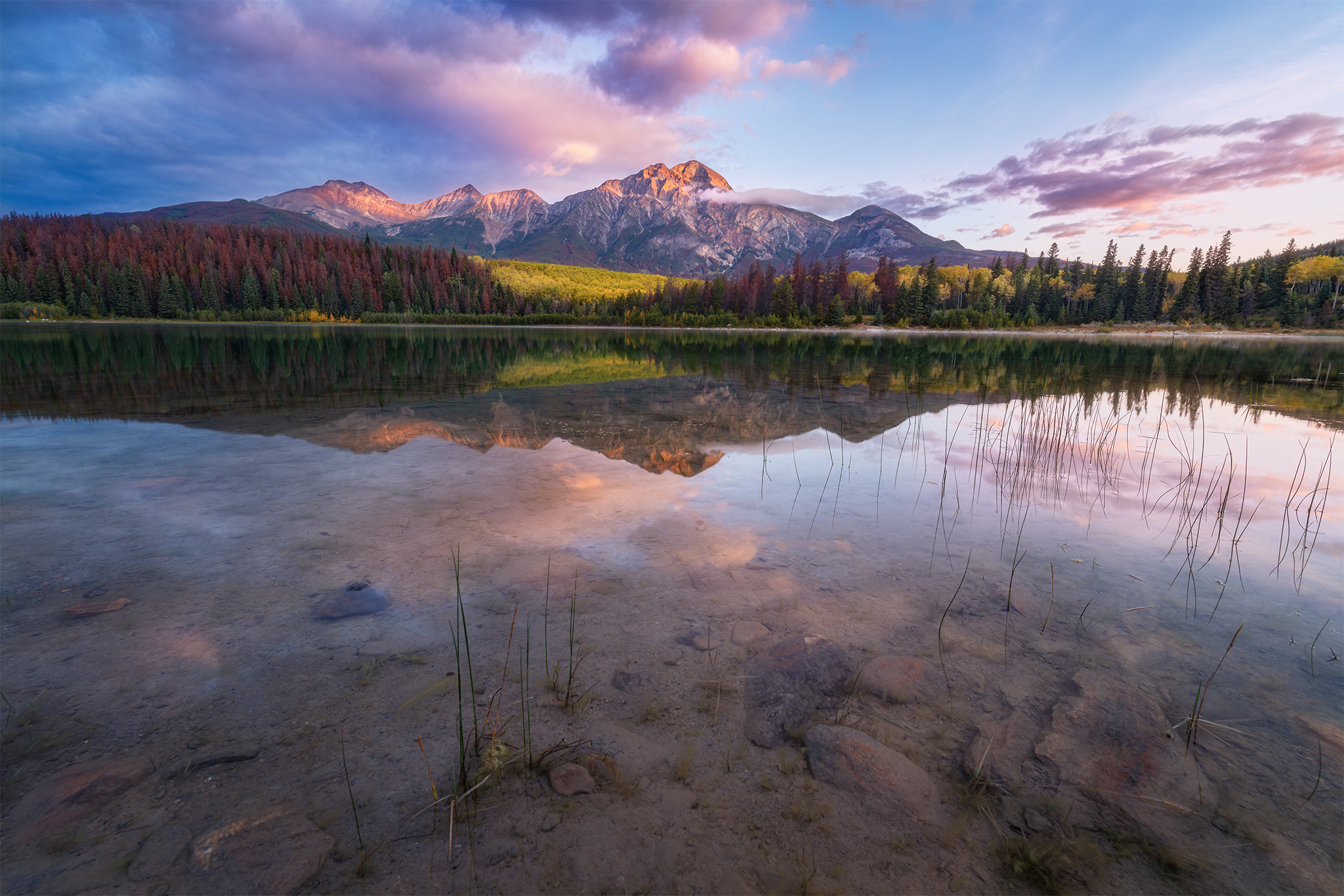
By now, you’ve explored both composition and the ways light shapes a landscape. But the true power of photography emerges when these two elements work together. Composition gives your photo structure and guides the viewer’s eye, while light creates mood, depth, and emotion. In my experience, the strongest images come from intentionally thinking about how light interacts with the scene you’ve composed, not just chasing dramatic skies or beautiful colours.

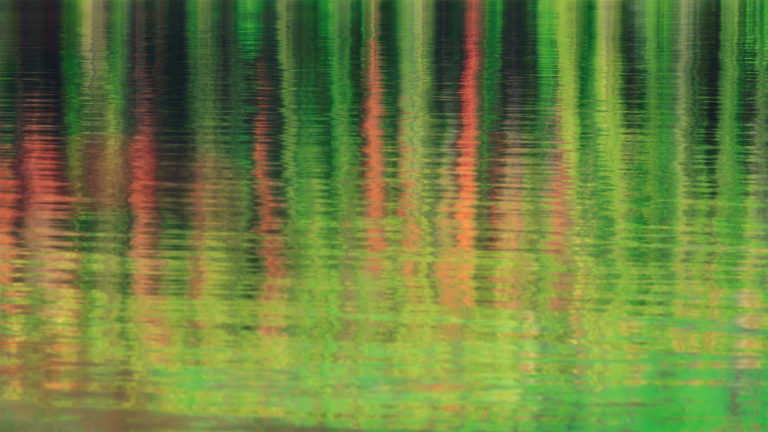
An intimate landscape photo of a reflection of pine trees in Jasper National Park

Telling a Story With Light and Composition

In the field, I often start by framing the scene: identifying a compelling subject, a foreground element, and natural leading lines. Then I observe how the light falls across those elements. Shadows can emphasize texture, highlights can draw attention, and directional light can add a sense of depth and dimension. Sometimes, flat or overcast light may reveal details that a golden hour glow would obscure, giving a completely different feeling to the same scene.

Understanding this interplay allows you to tell a story through your landscapes. Composition alone might organize the scene aesthetically, but combined with thoughtful use of light, it can evoke emotion, guide the viewer through the image, and communicate the experience of being in that place. From my years photographing landscapes across Western Canada, I’ve found that every landscape has multiple photographic possibilities, and seeing how light interacts with your composition opens the door to creativity you might otherwise miss.

Ultimately, landscape photography isn’t just about capturing what you see; it’s about expressing what you feel. By blending thoughtful composition with awareness of light, you give yourself the freedom to create images that resonate, both for you as the photographer and for those who experience your work.

Learn It — Then Experience It in the Field

Tutorials can teach the concepts, but real understanding happens on location. Join me in the field for hands-on landscape photography workshops focused on light, conditions, planning, and execution in real environments across Western Canada.

I hope you found this tutorial helpful. More information on these topics can be found in the videos at the bottom of the page. If you have any questions that you think I can answer, drop me a line! If you want to share these tips with your friends then use the share links right here.

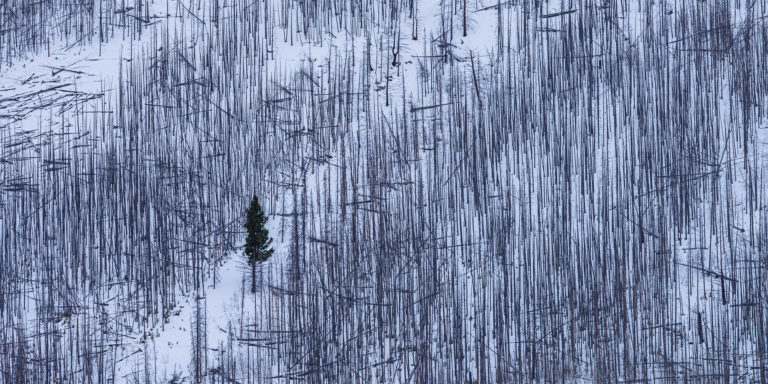
An intimate landscape photograph of a lone surviving tree in the middle of a burnt forest at lake Minnewanka, Alberta

See more of my landscape and night photography on my social media.

GDPR